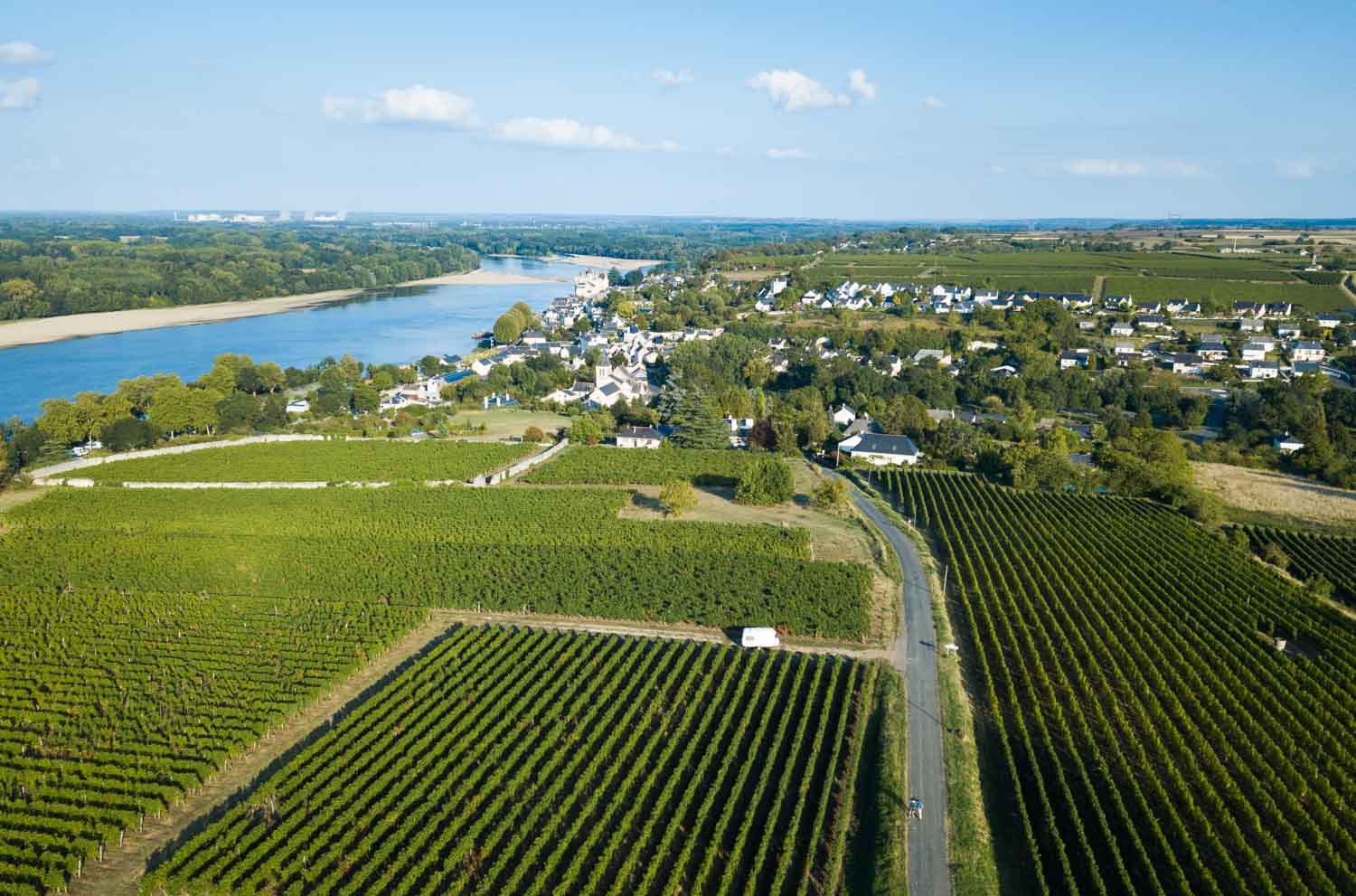
The Ratron – Clos des Cordeliers estate is located in Souzay-Champigny, 9 km from the Isle Verte campsite in Montsoreau.
Le Clos des Cordeliers has been a family estate since 1932. It produces red wines from the Cabernet Franc grape variety and white wines from Chenin. two iconic grape varieties from the Saumur region. The estate is managed as a high environmental value area.
The Rocheville estate is located in Parnay, 4 km from the Isle Verte campsite in Montsoreau.
The Rocheville estate is a 17-hectare family estate, farmed entirely organically. The white wines are made from Chenin grapes, making them typical Loire Valley wines, and the reds are made from Cabernet Franc grapes. The estate offers wine tastings. Please ask at the campsite reception for opening hours.
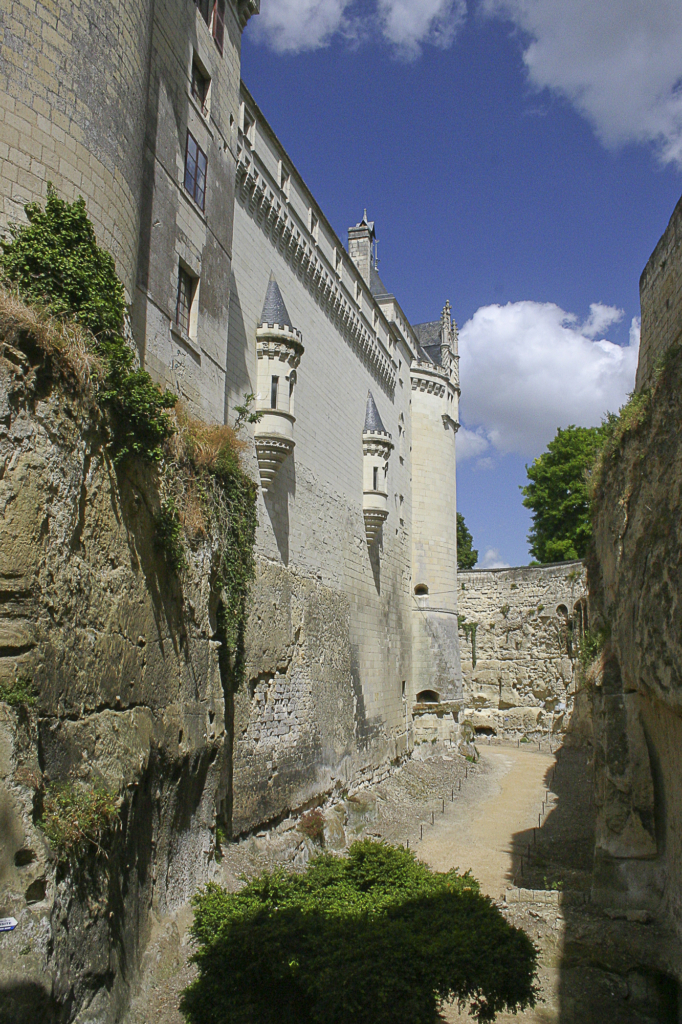
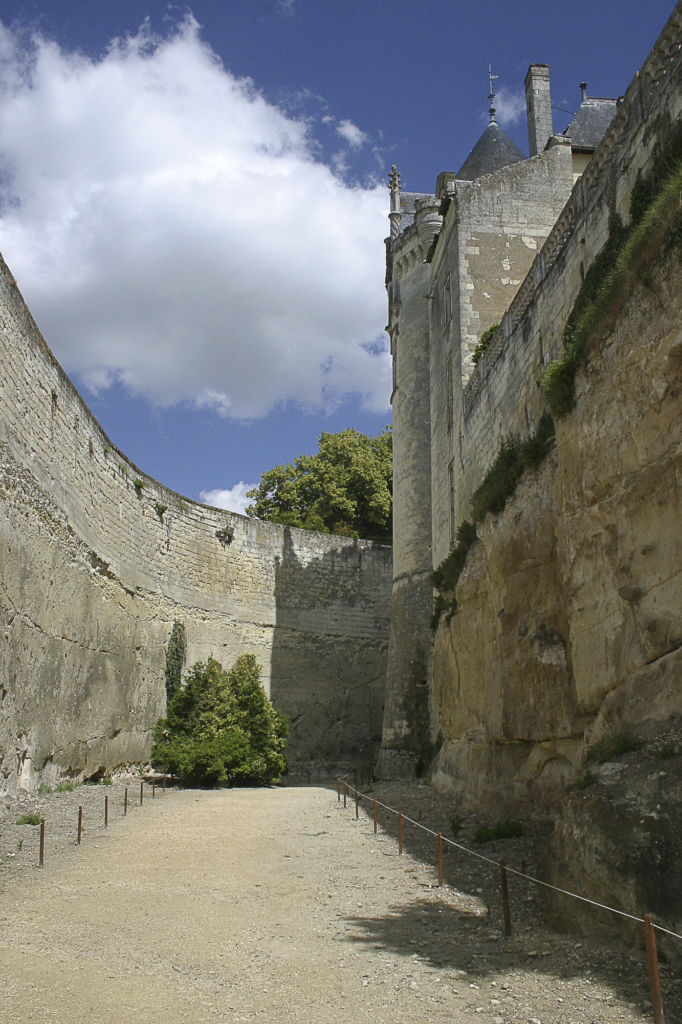
The Château de Brézé, an underground castle to discover just a few minutes from the Isle Verte campsite
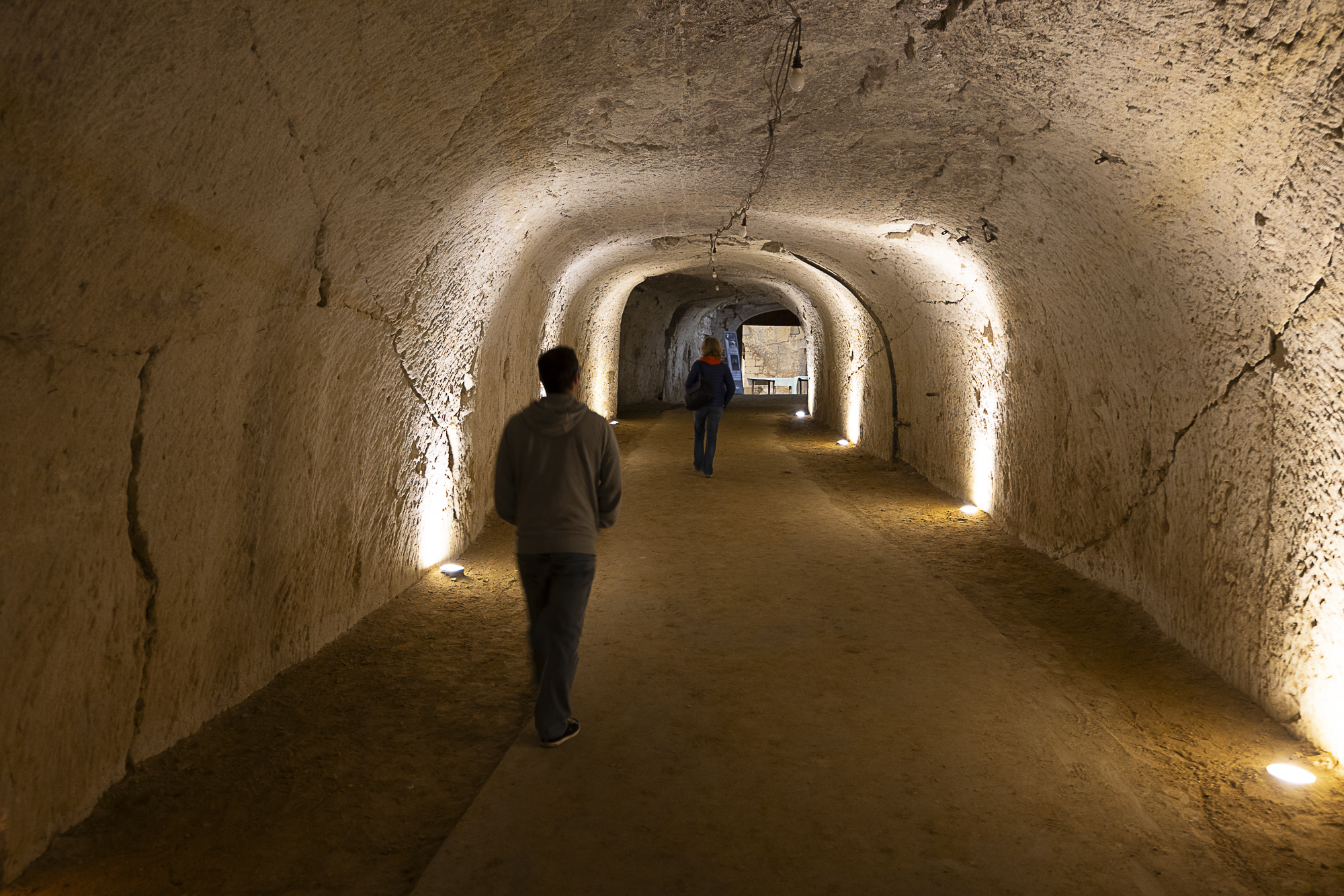
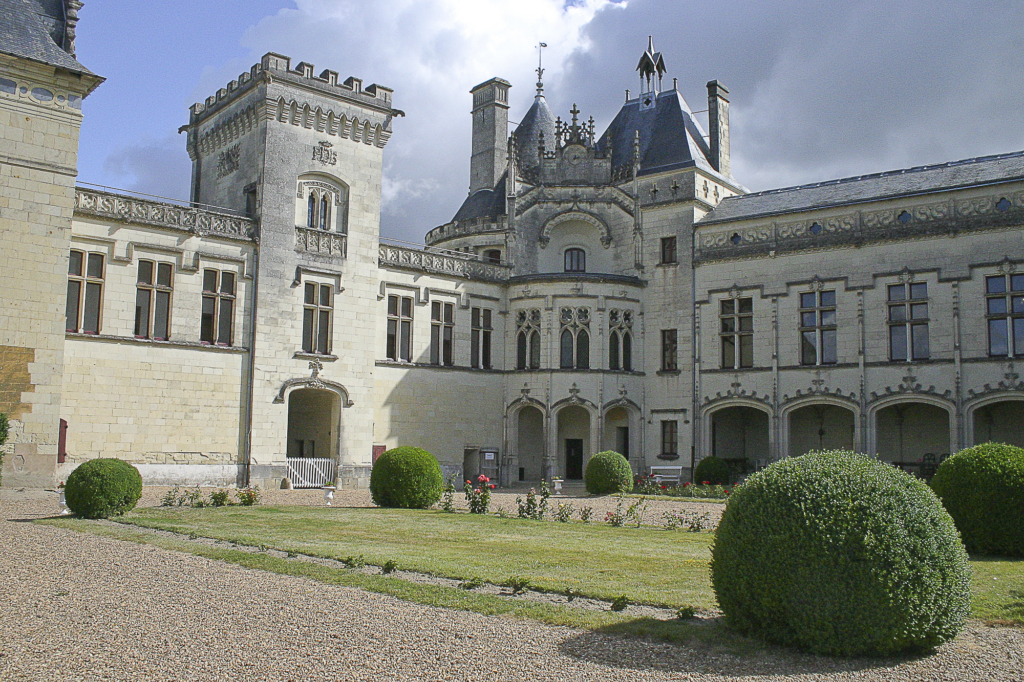
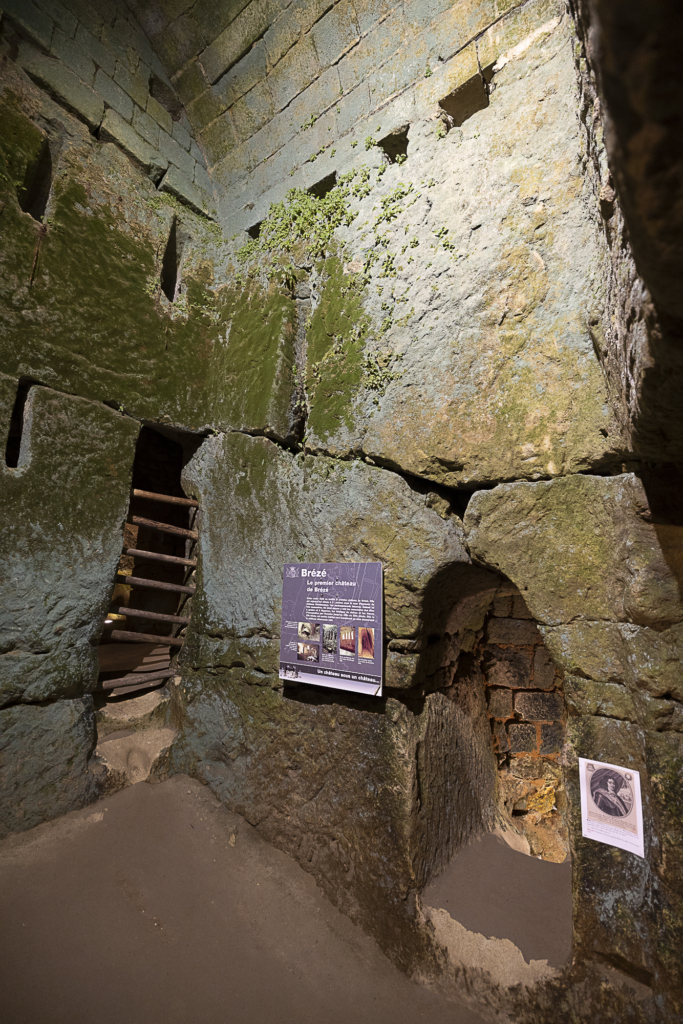
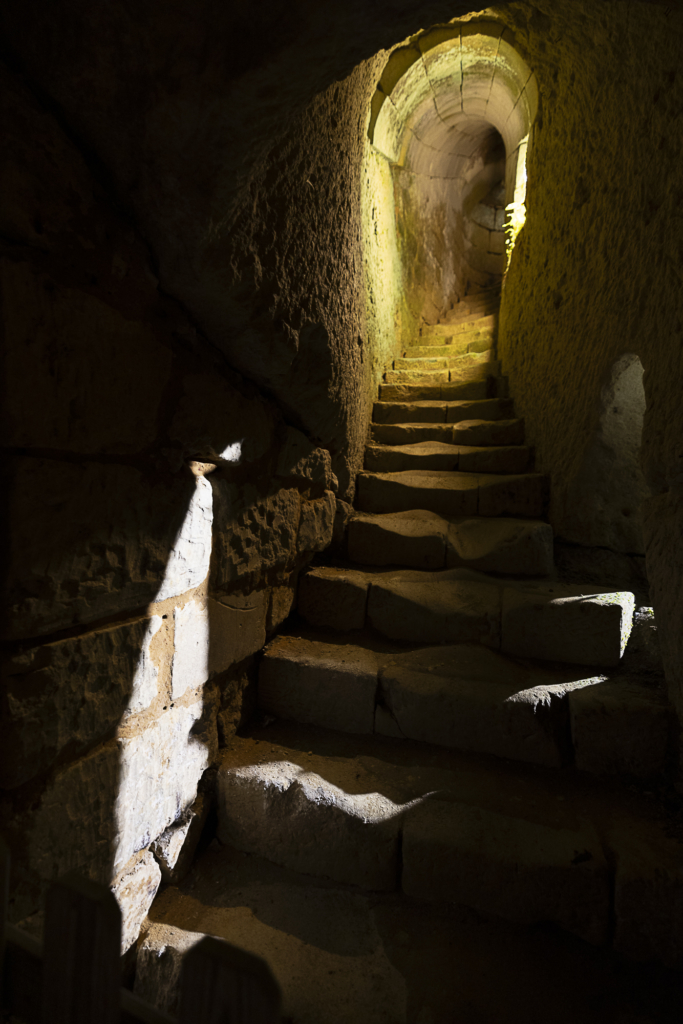
Nestling in the heart of the Maine-et-Loire region, the majestic silhouette of Château de Brézé stands proudly amidst vineyards and orchards. This stately home, located just a few kilometres from Saumur, is an architectural gem well worth a visit. But what makes Château de Brézé truly unique is its impressive troglodytic underground network, a fascinating labyrinth that stretches beneath the earth and on which a Renaissance château was built. A must-see during your camping holiday in Anjou at camping l’Isle Verte.
A Château amidst the vines in Anjou
Dating back to the 11th century, Château de Brézé has been rebuilt and embellished several times over the centuries. Today, it boasts a harmonious blend of architectural styles, from medieval to Renaissance. Strolling through its richly decorated rooms, you can admire sumptuous tapestries, antique furniture and period paintings that tell the story of the fortress’s turbulent history. The formal park surrounding the château adds a further touch of majesty to this historic site, offering a pleasant stroll among the sculpted hedges and century-old trees.
A unique troglodyte castle
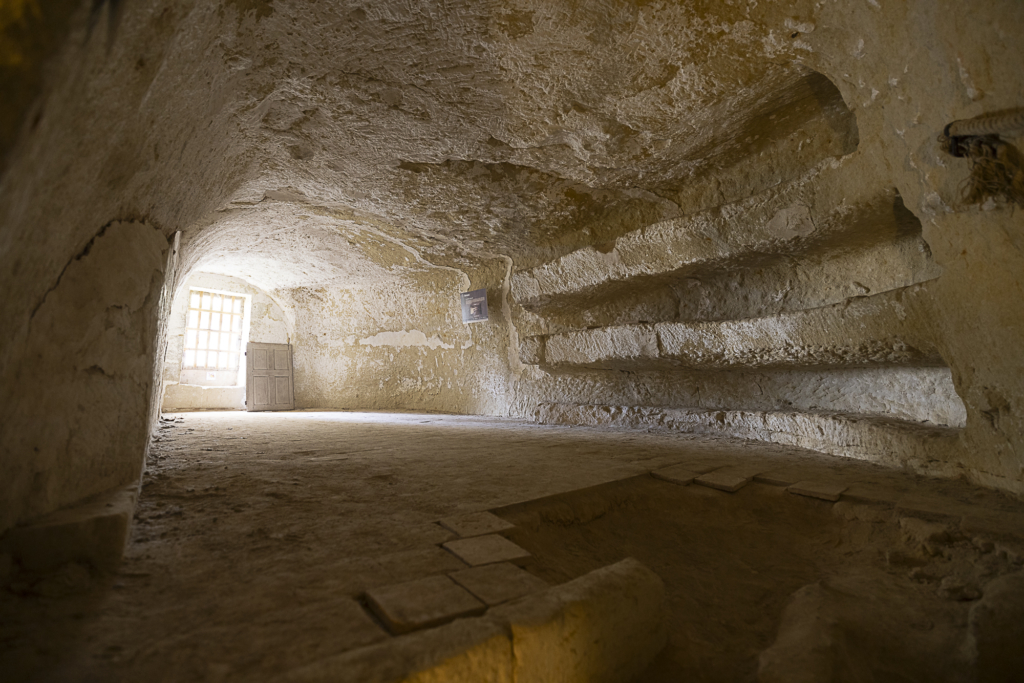
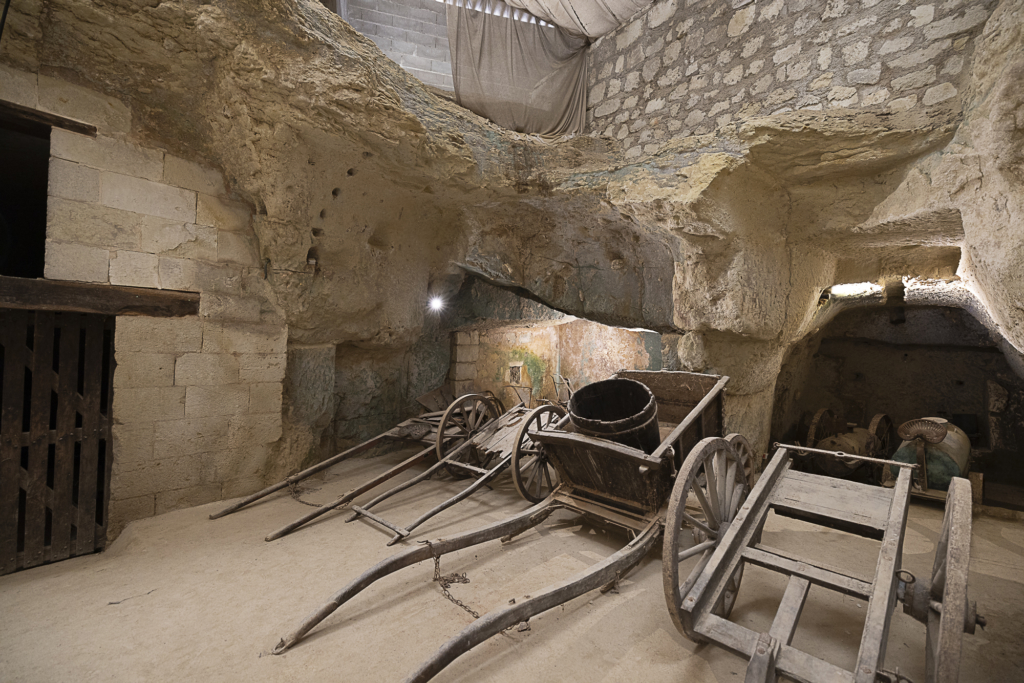
As elegant as Château de Brézé is, what really sets it apart from other Loire châteaux is its incredible network of underground galleries, one of the most extensive in Europe. These tunnels, used since the Middle Ages, served as a refuge in the event of an attack, as a storage area for wine and food, and as a wine production site. Exploring this underground labyrinth, visitors can discover troglodytic stables, kitchens, cellars and even an underground drawbridge. This plunge into the bowels of the earth offers a unique insight into the daily life and defence strategies of days gone by.
A fascinating tour for all the family
A visit to the Château de Brézé is like immersing yourself in an extraordinary historical and cultural adventure. Whether you’re a history buff, an architecture enthusiast or simply looking for an original excursion, this château and its underground world promise a memorable experience. Guided tours are available to help you better understand the intricacies of this unique site, and local wine tastings round off the visit in style. Château de Brézé is not only a testimony to the past, but also a living place where every stone tells a story, every tunnel a secret, and every visitor becomes an explorer of another time.
In the heart of the Anjou vineyards, just a few kilometres from the Isle Verte campsite and the village of Montsoreau, awaits the Abbey of Fontevraud, a veritable jewel of French heritage, combining a rich history with impressive architecture. This monastic complex, founded in the early 12th century, has survived the passage of time, transforming itself in line with political and social upheavals. Today, the abbey stands out as a place of living memory and a dynamic cultural centre, attracting visitors from all over the world. Be sure to visit it during your camping holiday in the Loire Valley.
History and heritage of Fontevraud Abbey
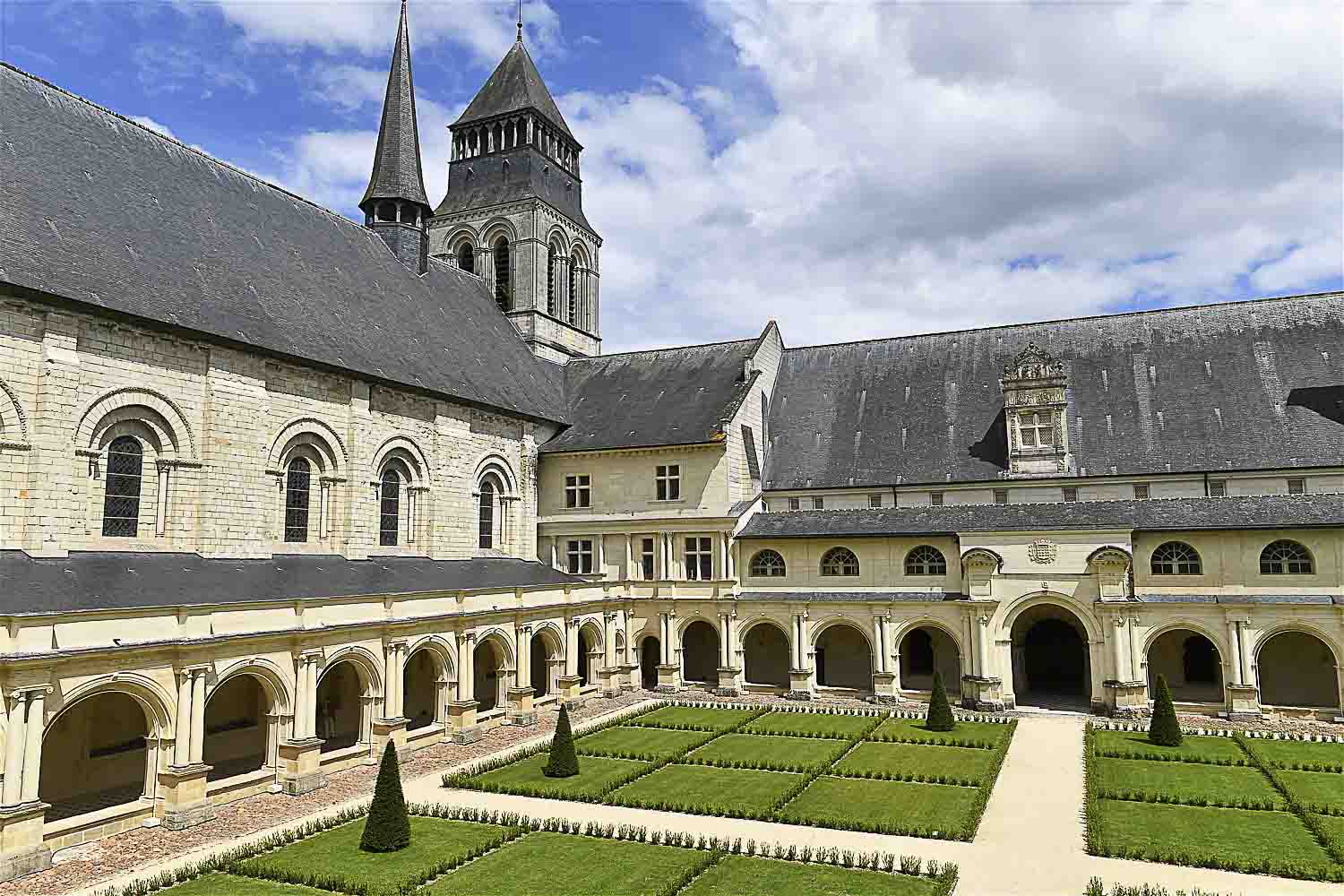
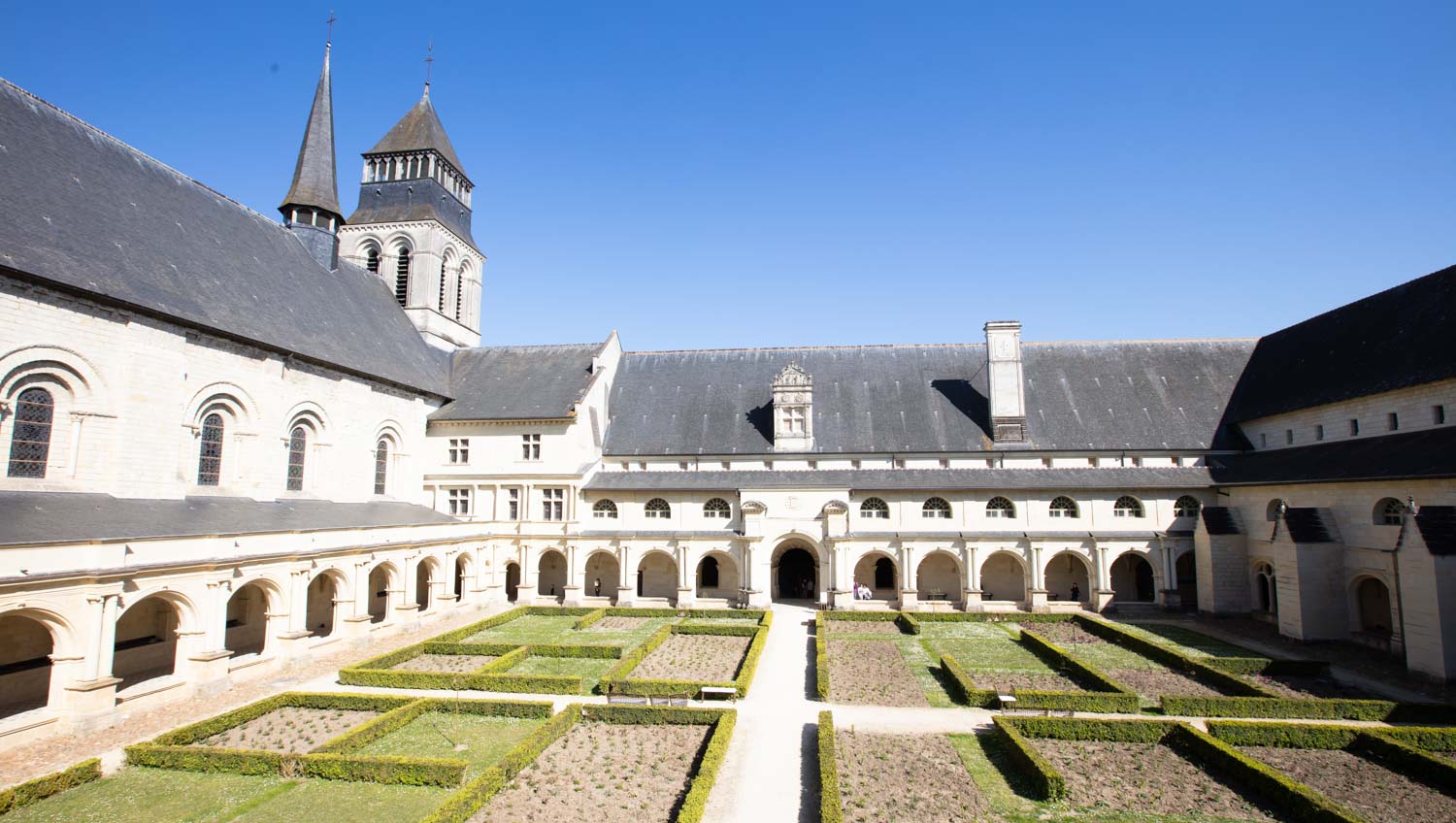
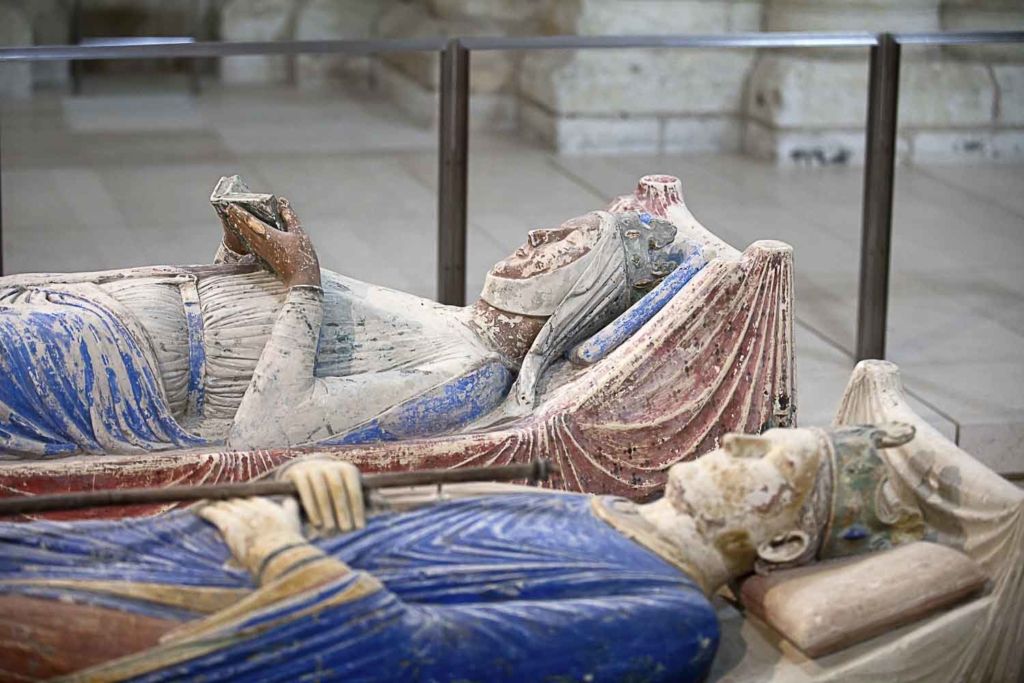
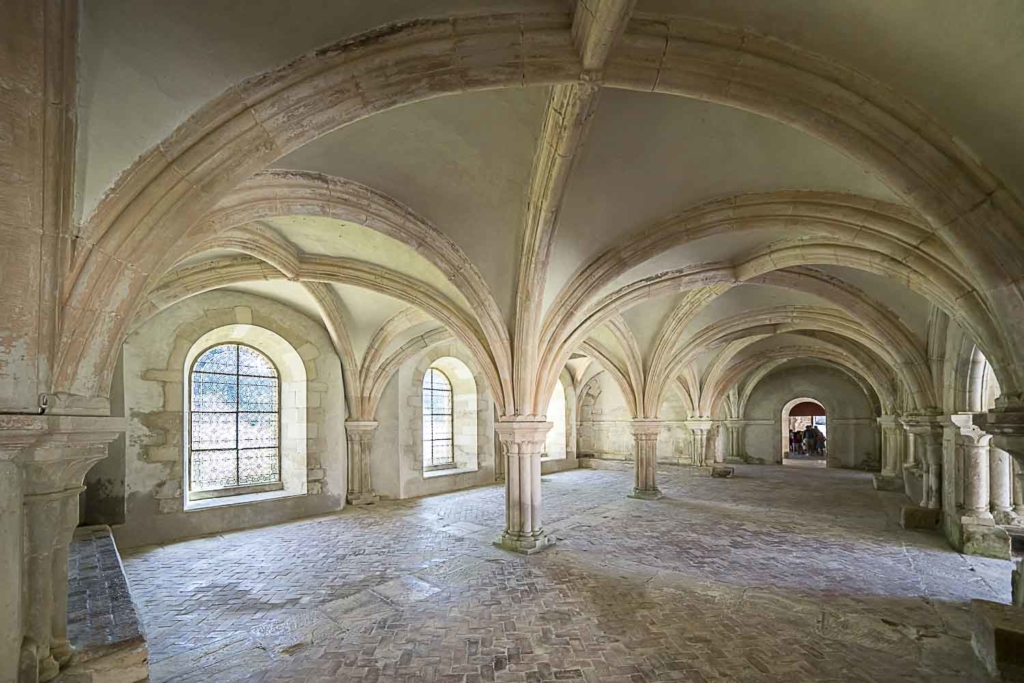
Founded in 1101 by Robert d’Arbrissel, Fontevraud Abbey was originally a mixed religious community run by abbesses over the centuries. The abbey quickly became a major spiritual and intellectual centre in the Middle Ages. Such was its importance that several members of England’s royal family, including Henry II Plantagenet, Eleanor of Aquitaine and Richard the Lionheart, were buried there. You can still admire their graves. The Romanesque abbey boasts remarkable architecture, with its abbey church, cloisters and various monastic buildings. The whole complex, built of tufa stone, is as white as the buildings of the Anjou region. For children, there are fun and interactive tours with tablets.
From Monastery to Prison: A Radical Transformation
After the French Revolution, Fontevraud Abbey underwent a radical transformation, being converted into a prison by Napoleon in 1804. For almost 150 years, until its closure in 1963, the abbey housed prisoners within its austere walls. This period left deep scars on the buildings, but also allowed the abbey’s structure to be preserved. The conversion of the abbey into a prison is a fascinating testament to the changing uses of historic buildings in France, and provides a striking contrast with its religious and spiritual past. During your visit to this majestic building, part of the exhibition is devoted to this period and details the daily life of the inmates.
Discover a lively cultural centre not far from your campsite in the Loire Valley.
Since the closure of the prison, Fontevraud Abbey has undergone a new renaissance as a cultural and tourist centre. Today, it hosts contemporary art exhibitions, concerts and various cultural events throughout the year. A visit to the abbey reveals not only its rich historical past, but also its current dynamism. Visitors can explore its gardens, restored rooms and numerous monuments, while enjoying the cultural events that punctuate the abbey’s year. Take a look at the Abbaye de Fontevraud calendar to discover the dates not to be missed during your holiday at camping l’Isle Verte in Montsoreau.
The Domaine des Damoiselles, in Souzay – Champigny, is just a few kilometres from the Isle Verte campsite in Montsorteau. It covers 25 hectares in the communes of Turquant, Montsoreau and Parnay.
An organic farming estate
Recently awarded the organic label, the estate has just bottled its first organic vintages.
Wines available in the restaurant and wine bar at the Isle Verte campsite in Montsoreau
Cuvée Côte Sauvage
This 100% Chenin white wine is aged exclusively in vats.
Cuvée Horizon
This Saumur – Champigny is an organic cuvée.
Cuvée Grand Large
This 100% Cabernet – Franc Saumur – Champigny benefits from fairly long ripening with grapes from fine terroirs.
Domaine Filliatreau à Turquant à proximité du camping l’Isle Verte
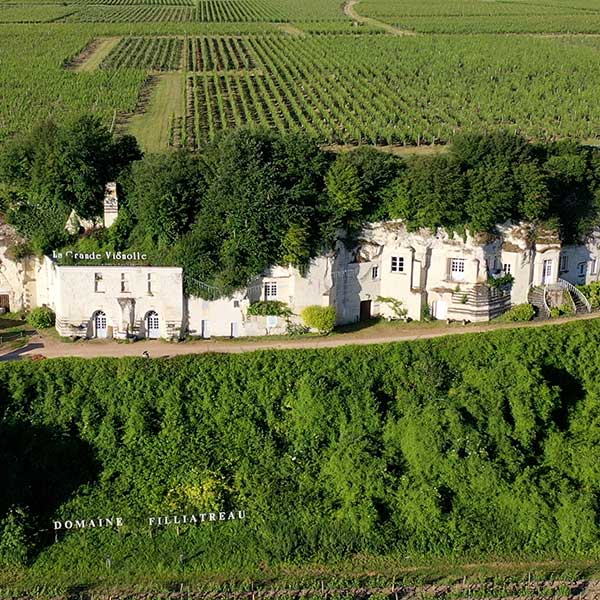
Le Domaine Filliatreau bénéfice d’un cadre exceptionnel, creusé directement dans le coteau face à la Loire.
Le domaine Filliatreau est un domaine familial. Lorsque Paul Filliatreau, père de Christina qui est aujourd’hui à la tête du domaine, reprend le domaine en 1967, il ne fait que 8 hectares. Il en fait aujourd’hui 45. Dont 13 hectares en Saumur et 32 hectares en Saumur – Champigny.
Un domaine en agriculture biologique
Tout le domaine a été converti en bio et en biodynamie.
Les vins proposés au restaurant et au bar à vin du camping l’Isle Verte à Montsoreau
Château Fouquet Saumur Rosé
Ce vin Saumur rosé est produit à Brézé sur de jeunes vignes 100% Cabernet – Franc.
Château Fouquet Saumur Rouge
Ce Saumur rouge est cultivé en bio et biodynamie sur le terroir de Brézé.
Cuvée Domaine Filliatreau Saumur – Champigny
Cette cuvée issue de Cabernet – Franc en culture bio est un Saumur – Champigny.
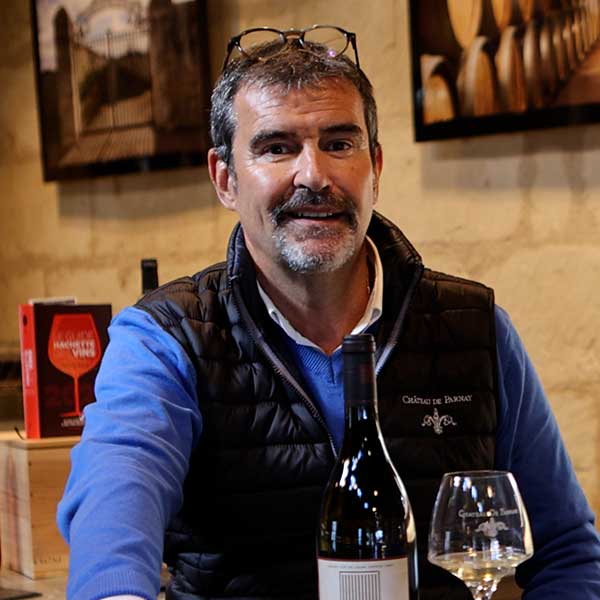
Le domaine Vincenot et fils regroupe deux domaines, le Château de Parnay, à proximité de Montsoreau, et le Château Princé à côté d’Angers. Le château de Parnay s’étend sur 30 hectares et propose des vins rouge, blanc et rosé.
Le Château de Parnay propose des vins rouge et rosé à partir de Cabernet – Franc et des blancs 100 % Chenin. Les rouges représentent 40 / 45%, les blancs environ 40% et le reste en rosé.
Un engagement environnemental
Tous les vins sont en culture biologique.
Le Clos entre les Murs
Le domaine est assez ancien. Son créateur, Antoine Cristal, a eu l’idée de développer un clos dont les vignes traversaient des murs afin que le pied soit au Nord et le raisin au Sud qui profite de la chaleur accumulée par la pierre de Tuffeau pendant la journée. C’est une cuvée confidentielle de 1500 bouteilles. C’est le joyau du domaine.
Les vins proposés au restaurant et au bar à vin du camping l’Isle Verte à Montsoreau
Cuvée le Chemin des Murs
Ce vin est un Saumur blanc, 100% Chenin, 30% d’élevage en barrique et 70% en cuve inox.
Le Blason de Parnay
Ce Saumur – Champigny est 100% Cabernet – Franc en jeunes vignes.
Le domaine de Nerleux est une longue histoire familiale. Amélie Neauqui le gère aujourd’hui est en effet la 9e génération à la tête de ce domaine. Le domaine tire son nom de l’époque où les loups arpentaient les bords de Loire. Ner signifie en effet noir en vieux français, alors que leu signifie loup. Des loups noirs que l’on retrouve sur l’étiquette des bouteilles du domaine.
Le domaine de Nerleux se situe sur la commune de Saint-Cyr-en-Bourg. Il s’étend sur 30 hectares au cœur de l’appellation de Saumur – Champigny. Le Chenin et le Cabernet – Franc en sont les principaux cépages, même si de nouveaux cépages (Chardonnay, Grolleau, Pinot Noir, etc.) ont été récemment introduits pour diversifier la production. Les vins du Domaine de Nerleux sont cultivés en appellation Saumur-Champigny, Saumur Blanc, Saumur Rosé, Crémant de Loire et Coteaux de Saumur.
Un engagement environnemental
A son arrivée à la tête du domaine, Amélie a entrepris de changer la façon de travailler et s’est tourné vers l’agriculture biologique. Le désherbage chimique a cédé sa place au désherbage mécanique ou manuel et des haies, garantes de la biodiversité, ont été replantées entre les parcelles.
Chenin et de Cabernet Franc
Le Domaine de Nerleux produit essentiellement des vins en Chenin et en cabernet – Franc, les deux cépages emblématiques du Saumur – Champigny. Toutefois, depuis quelques années, de nouveaux cépages ont été plantés afin de diversifier la production. On trouve donc, aujourd’hui, des vins contenant du Chardonnay, du Pinot Noir ou encore du Grolleau. .
Les vins proposés au restaurant et au bar à vin du camping l’Isle Verte à Montsoreau
Cuvée le Clos Paulette
Ce vin est un Saumur blanc, 100% Chenin, issu d’une parcelle vieille vigne.
Cuvée les Loups Blancs
Ce Saumur blanc 100% Chenin est un vin parcellaire provenant de vieilles vignes de la commune de Brézé.
Cuvée les Loups Noirs
Cuvée emblématique du domaine, ce vin rouge est 100% Cabernet – Franc. Il est produit sur la commune de Saint-Cyr-en-Bourg.
Domaine Arnaud Lambert in Saint-Cyr-en-Bourg, Brézé and Montsoreau
Domaine Arnaud Lambert is a young estate. Wishing to change his life, Arnaud Lambert’s father took over the estate in 1996. It was a way of returning to the land of his birth, in Saint-Cyr-en-Bourg, in the heart of the Saumur – Champigny vineyards. Arnaud joined him in 2005, before taking over from him.
The Arnaud Lambert estate covers the communes of Brézé, Saint-Cyr-en-Bourg and Montsoreau. It covers 45 hectares. Based on two grape varieties, it produces 6 whites and 6 reds, as well as 3 Crémants de Loire. The vines at Saint-Cyr-en-Bourg and Brézé produce mainly white wine, while the vines at Montsoreau are dedicated to red wine.
Biodynamic Saumur wines
The estate has been organically farmed since 2009. In 2018, it will switch to biodynamic farming. Arnaud Lambert is particularly interested in his terroir and its micro and macrocosms.
Chenin and Cabernet Franc
The Arnaud Lambert estate works with two grape varieties, Chenin and Cabernet – Franc.
The wines served at the restaurant of the Ilse Verte campsite in Montsoreau
Cuvée le Clos de Midi
This 100% Chenin white wine is produced in the commune of Brézé on sandy-loamy, chalky soil.
Cuvée la Coulée de Saint-Cyr
This plot-based white wine is produced on a 1.5 hectare plot of clay-limestone soil. It is a 100% Chenin wine.
Cuvée du Clos Mazurique
This plot-based red wine is produced in the commune of Brézé. Although Brézé is renowned for its white wines, it also produces some excellent reds, such as this 100% Cabernet Franc.
The Château de Targé estate boasts an exceptional site in the heart of the Saumur-Champigny AOC. The château and cellars are carved out of the tufa rock on a hillside facing the Loire, between Montsoreau and Saumur, just a few kilometres from the Isle Verte campsite. The vineyards stretch out above the château, on the Parnay plateau. Tasting the delicious wines produced by Paul Pisani, the estate’s winemaker, will give you the chance to discover this special place.
The Château de Targé estate lies in the commune of Parnay. You can get there by car, but also by bike. Château de Targé is just 3 km from the Isle Verte campsite in Montsoreau. During your visit, you are likely to be greeted by Edouard Pisani. Paul’s father managed the estate from 1976 to 2016, before passing it on to his son Paul. Although he no longer works in the vineyards, he is delighted to share his passion with the customers who come to taste the wines of Château de Targé.
Saumur wines certified organic
On his arrival at the head of the estate, Paul Pisani undertook the conversion of the estate to organic farming. The estate already had environmental labels such as Terra Vitis and the HVE (High Environmental Value) label. The transition to organic farming was completed in 2020. Since 2020, Château de Targé has been offering certified organic wines.
Chenin and Cabernet Franc
Château de Targé produces wines from the Saumur and Saumur – Champigny appellations. The estate’s two grape varieties are Cabernet – Franc and Chenin. The estate produces 13 cuvées, including red, white and rosé, as well as sparkling Saumur (white and rosé). The menu at the campsite restaurant includes two wines produced at the Château de Targé estate: Rose de Targé and Tradition, the estate’s flagship wine.
Wines available in the restaurant and wine bar at the Isle Verte campsite in Montsoreau
Cuvée la Rose de Targé
This AOC Saumur Rosé is made from 100% Cabernet – Franc grapes grown on a 0.8 hectare plot.
Cuvée Tradition
This 100% Cabernet Franc red is the flagship cuvée of Château de Targé. It is produced from a 12-hectare plot.